Quick answer: In the UAE, side and rear car windows can be tinted up to 50%. The front windscreen must stay clear, apart from a narrow sun strip at the top where allowed. Going darker can mean a AED 1,500 fine, and in Dubai the car can be impounded, with a AED 10,000 release fee. The good news is that you don't need dark tint to keep a car cool. A quality nano ceramic film at 50% or even 70% can block more heat than a cheap dark film.
UAE window tint limits at a glance
| Window | What the rules allow |
|---|---|
| Front windscreen | No tint film. A narrow strip at the top has been reported as allowed, but some police advisories say any windscreen tint is prohibited, so check before you fit one. |
| Front side windows | Up to 50% |
| Rear side windows | Up to 50% |
| Rear windscreen | Up to 50% |
The 50% limit comes from the UAE Federal Traffic Law and applies across all emirates. Police can measure your windows with a light meter at any traffic stop.
Fines and penalties for illegal tint
- AED 1,500 for tinting beyond the permitted percentage.
- AED 1,500 for tinting a vehicle that is not allowed to be tinted.
- Dubai: under Decree No. 30 of 2023, cars with excessive tint, or with a windscreen tinted without a permit, can be impounded. The release fee is AED 10,000.
So a "dark is cooler" tint can easily cost more than the film itself.
Medical and special exemptions
Drivers with certain medical conditions, and some official vehicles, can apply for a permit to go darker than 50%. The permit comes from the traffic authority in your emirate and must be kept in the vehicle at all times. Without that permit, the 50% limit applies.
What does "50% tint" actually mean?
This is where most people get confused. Window films are rated by VLT (Visible Light Transmission): how much light passes through.
- A 50% VLT film lets half the light through. It looks like a medium, classy tint.
- A 5% VLT film lets almost no light through. In the market this is often called "95% tint" or "limo tint", and it is not legal in the UAE without a permit.
In the GCC, customers usually ask by darkness ("I want 80% tint"), while film boxes are labelled by VLT. Here is how they match up:
| Customer asks for | Film VLT | Delta Wraps® shades | Legal on UAE side windows? |
|---|---|---|---|
| "90–95% tint" (limo) | 1–5% | TNC-02, TNC-05, NC-01, NC-05 | No (permit only) |
| "80–90% tint" | 10–18% | TNC-18, NC-10, NC-18 | No (permit only) |
| "60–65% tint" | 35% | TNC-35, NC-35, NCR-35 | No (permit only) |
| "50% tint" | 50% | TNC-50, NC-50, NCR-50 | Yes |
| "30% tint" (light) | 70% | TNC-70, NC-70, NCR-70 | Yes |
Important: police measure the light coming through the glass and film together, and factory glass already blocks some light. A film rated exactly 50% can read slightly darker once it is installed. Ask your installer to meter the window after fitting, especially on cars with factory-tinted rear glass.
Lighter film, cooler car: why heat rejection matters more than darkness
Most of the heat you feel in the UAE sun comes from infrared (IR) light, not from visible light. A cheap dyed film looks dark but lets infrared straight through, so the cabin still bakes. A nano ceramic film blocks infrared while staying light, so you can stay legal and keep the car cool.
- Delta Wraps® TNC-50 (Titanium Nano Ceramic): 50% VLT, 95% infrared rejection, 99% UV protection, up to 15-year warranty.
- Delta Wraps® NC-50 (Nano Ceramic): 50% VLT, 84.7% infrared rejection, 99% UV protection, up to 8-year warranty.
- Delta Wraps® NCR-50 (Nano Carbon): 50% VLT, 83.1% infrared rejection, 99.8% UV protection, up to 5-year warranty.
All three are non-metallic, so they won't interfere with GPS, mobile signal, Salik tags or keyless entry. For the coolest legal setup, a nano ceramic film at 50% on the sides and rear does far more than an illegal dark film with no heat rejection.
Tint rules in other GCC countries
- Oman: the Royal Oman Police allow up to 50% tint on side and rear windows. The windscreen must stay untinted.
- Saudi Arabia and Qatar: the rules are stricter on front windows and differ by vehicle type, and fines vary.
Rules change, so always confirm with the local traffic authority before installing, especially on vehicles that cross borders.
For installers, detailing shops and fleet operators
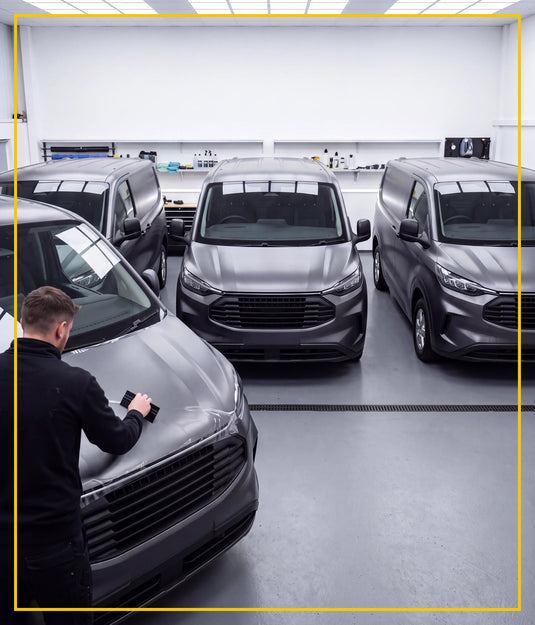
If you fit tint for customers, or manage company vehicles, legal tint is now a selling point. Fleet cars with illegal tint risk fines and impoundment, and customers increasingly ask for "legal but cool".
Delta Wraps® supplies professional window film rolls from stock in the UAE:
- TNC Titanium Nano Ceramic: our top series, 1.52 m × 30 m rolls.
- NC Nano Ceramic: 1.52 m × 30 m rolls.
- NCR Nano Carbon: 0.5 m, 1 m and 1.52 m widths × 30 m.
We support installers and fleet buyers across the UAE, Saudi Arabia, Oman and Qatar with bulk pricing and technical data sheets.
WhatsApp us for wholesale prices →
Or browse the full range: Delta Wraps® window films.
Frequently asked questions
Is 50% tint legal in Dubai?
Yes. Side and rear windows can be tinted up to 50% in Dubai and across the UAE. The front windscreen must stay clear, apart from a narrow sun strip at the top where allowed.
What is the fine for dark tint in the UAE?
AED 1,500 for exceeding the permitted tint. In Dubai the car can also be impounded, with a AED 10,000 release fee.
Can I tint my front windscreen in the UAE?
Not as a full tint. Some reports allow a narrow sun strip at the top, but police advisories have said windscreen tint is prohibited, so check with your local traffic police before fitting one.
Which tint keeps a car coolest while staying legal?
A nano ceramic film at 50% VLT, such as Delta Wraps® TNC-50 with 95% infrared rejection. It blocks heat without going darker than the law allows.
Does window film affect GPS or mobile signal?
Metallic films can. Delta Wraps® TNC, NC and NCR films are non-metallic and signal-friendly.
Can I get a medical exemption for darker tint?
Yes. Drivers with qualifying medical conditions can apply to the traffic authority in their emirate. The permit must be kept in the car.
This guide is for general information and reflects publicly reported UAE traffic rules as of October 2026. Rules can change and may be applied differently in each emirate, so always confirm with the traffic police or RTA before installing.